
The 2026 Economic Outlook: Navigating a Terrain of Transition and Risk
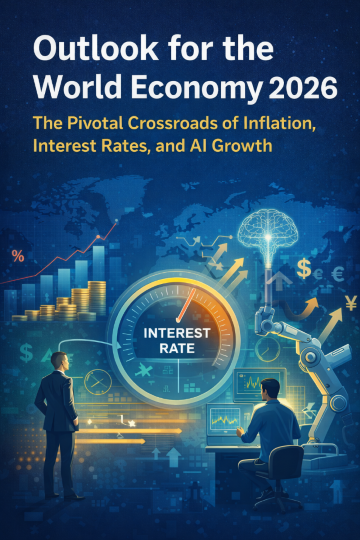
As we look toward 2026, the global economy appears poised at a critical juncture. Following years of pandemic disruption, geopolitical upheaval, and monetary policy experimentation, 2026 may represent a year where delayed consequences and structural shifts converge. While precise predictions remain elusive in our complex world, several emerging trends suggest both challenges and opportunities for investors.
Predicted Economic Landscape for 2026
Most analysts anticipate modest, uneven growth in 2026, with developed economies likely expanding at a slower pace than the post-pandemic rebound years. Inflation is expected to remain above pre-2020 targets in many regions, though potentially more stabilized than in previous years. The “higher-for-longer” interest rate environment may persist, continuing to pressure debt-laden sectors while rewarding savers and conservative investors.
Technological transformation—particularly in AI, energy transition, and biotechnology—should continue driving selective growth sectors, potentially creating market divergence between innovative industries and traditional ones struggling with adaptation costs.
Key Dangers for Investors in 2026
1. The Lagged Impact of Monetary Tightening
Central banks’ aggressive rate hikes since 2022 will fully work through economic systems by 2026. The delayed effects could trigger:
-
Unexpected corporate defaults as cheap debt refinancing becomes impossible
-
Commercial real estate crises, particularly in office sectors
-
Government budget crises in highly indebted nations
2. Geopolitical Fragmentation Accelerating
The erosion of globalization norms continues with potential 2026-specific risks:
-
Election volatility in multiple major economies could reverse policy trajectories
-
Resource nationalism affecting critical minerals and energy markets
-
Tech decoupling disrupting semiconductor, AI, and advanced manufacturing supply chains
3. Climate Transition Disruptions
The green energy shift creates both opportunities and systemic risks:
-
Stranded assets in fossil fuel sectors triggering financial instability
-
Uneven regulatory landscapes creating compliance chaos for multinationals
-
Physical climate events disrupting agricultural and coastal economic zones
4. AI-Induced Labor Market Dislocation
While AI boosts productivity, 2026 may see more pronounced:
-
Sectoral unemployment spikes in administrative, creative, and analytical roles
-
Wage polarization between AI-augmented and displaced workers
-
Social unrest potentially impacting consumer confidence and stability
5. Sovereign Debt Sustainability Concerns
With global debt at record highs, 2026 risks include:
-
Emerging market debt crises with contagion potential
-
Loss of confidence in major economies’ debt management
-
Crowding out of private investment by government borrowing needs
6. Market Concentration Risks
Extraordinary reliance on a handful of mega-cap tech stocks creates vulnerability:
-
Correction risks if dominant companies miss growth expectations
-
Reduced portfolio diversification benefits
-
Regulatory actions targeting tech giants could create sudden valuation shocks
Strategic Considerations for Navigating 2026
Diversification Beyond Traditional Models: Geographic and asset class diversification remains crucial, but investors may need to consider adding “crisis hedge” assets like certain commodities, Treasury inflation-protected securities (TIPS), and possibly digital assets (with appropriate risk recognition).
Focus on Quality and Cash Flow: In a higher-cost-of-capital environment, companies with strong balance sheets, pricing power, and reliable cash generation may outperform speculative growth stories.
Scenario Planning Over Forecasting: Given elevated uncertainty, developing portfolios resilient across multiple potential outcomes (soft landing, stagflation, recession) may prove wiser than betting on a single economic narrative.
Attention to Policy Trajectories: With numerous elections scheduled globally in 2025-2026, policy volatility demands heightened political risk assessment in investment decisions.
Conclusion: The Prudence of Preparedness
The economic landscape of 2026 appears likely to reward vigilance, flexibility, and fundamental analysis over speculative momentum investing. While technological innovation and demographic trends continue to offer compelling growth narratives, the convergence of monetary, geopolitical, and structural transitions suggests heightened volatility.
The greatest risk may be assuming the post-pandemic patterns will persist unchanged. Instead, investors preparing for regime change—in inflation dynamics, interest rate norms, and global supply arrangements—may best position themselves to navigate whatever 2026 brings. As always, aligning investments with long-term goals rather than short-term predictions remains the soundest strategy in uncertain times.
Related articles:
1. The Dangers of PAS’s Religious Political Agenda: Malaysia at a Crossroads
2. A New Political Future for MCA, MIC, and Gerakan: Dissolution, Rebirth, and the Dangers of Any Alignment with PAS
3. Unity Government vs Opposition: Who Will Win GE16?
4. Those who always use race and religion issues to seek political gains are morally corrupt leaders
5. Can Malaysia Ever Be Corruption-Free?
6. It’s Time to Control Commercial Rent! Before It Hurts Our Wallets and the Economy
7. The Truth About the “Chosen People”: Faith or Deception?
8. The Illusion of Democracy and the Reality of Meritocracy — The Global Political Crisis and the Search for a New Governance Model
9. Corruption — The Most Lethal Cancer of a Nation
10. Putting National Interest First: Reject Extremism and Rebuild Malaysia’s Future
11. The Gains and Losses of Trump’s Tariff Policy: An Economic War That Hurt America Itself
12. Cryptocurrency: A Carefully Packaged Scam
13. America’s Debt Trap: Wrong Policies Accelerating National Decline
14. Why Humanity’s Future Should Move Toward Socialism
15. The Dual Nature of Religion — From Moral Guidance to Social Division
16. The West’s Double Standards and Hypocrisy: A Reality Exposed from Ukraine to Gaza
17. Malaysia Politics Today: A Country That Wants Stability, but Keeps Getting Drama
18. Malaysia’s Racial Politics: Are We Stuck Forever, or Slowly Moving Forward?
19. Is Malaysia Becoming More Conservative — Or Just Louder?
20. But Malaysia Could Become More Conservative If Moderates Stay Silent
Leave a Reply
Want to join the discussion?Feel free to contribute!