
The Battle Against the “Culprits” of Aging: Staying Vigilant Against “Free Radical” Traps in Daily Life
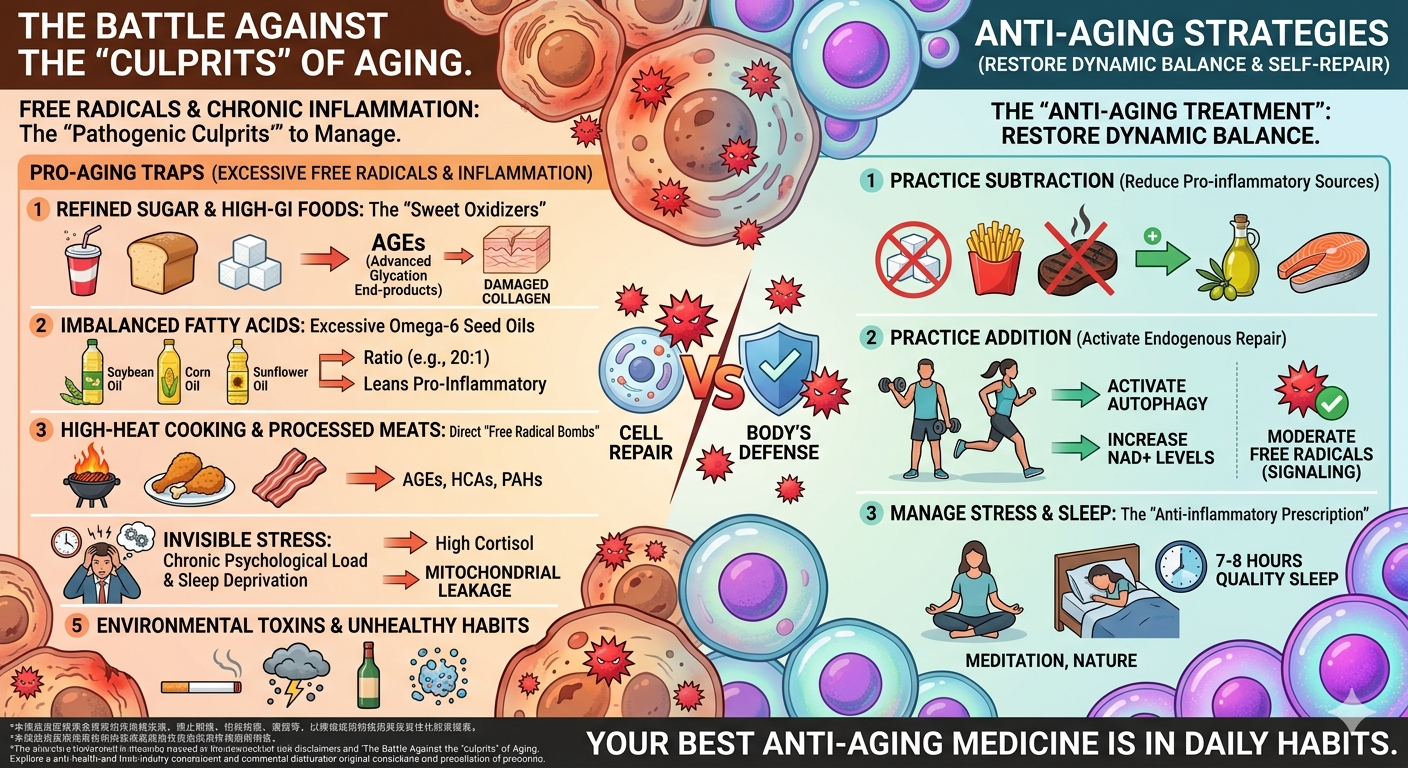
If we consider aging a “disease” that can be managed, finding and controlling its “pathogenic culprits” becomes the core of medicine and daily health maintenance. Oxidative stress caused by free radicals and the subsequent chronic inflammation are indeed major drivers that damage healthy cells and accelerate the aging of the body. Modern medicine has even coined a new term for this: “Inflammaging.”
However, modern longevity science reminds us that free radicals are not absolute “demons.” In moderate amounts, they are necessary substances for cell signaling and stimulating the body’s self-repair mechanisms (such as the adaptation process after exercise). The real danger lies in the imbalance between the excessive production of free radicals and the body’s ability to clear them.
In our daily lives, we often “feed” our bodies free radicals and inflammatory factors through our diet and lifestyle choices without realizing it. Here are some of the most overlooked “pro-inflammatory” culprits:
1. Refined Sugar and High-Glycemic Index (GI) Foods: The Sweet “Oxidizers”
High-GI foods—such as white sugar, sugary drinks, and refined grains—are not only hotbeds for obesity and diabetes but also catalysts for free radicals. When blood glucose concentrations spike rapidly, it reacts with proteins or fats in the body through non-enzymatic reactions to form Advanced Glycation End-products (AGEs). AGEs directly damage collagen (leading to skin sagging and wrinkles) and activate inflammatory pathways in the body, generating large amounts of free radicals and accelerating the aging of blood vessels and organs.
2. Imbalanced Fatty Acids: Excessive Omega-6 Seed Oils
The balance of fatty acids is crucial for controlling inflammation. Modern diets heavily rely on vegetable oils rich in Omega-6, such as soybean, corn, and sunflower oils. While Omega-6 is an essential fatty acid, the body leans toward synthesizing pro-inflammatory prostaglandins and leukotrienes when the ratio of Omega-6 to anti-inflammatory Omega-3 (found in deep-sea fish, flaxseed, etc.) is severely imbalanced. Modern diets often see ratios as high as 15:1 or even 20:1, while the ideal ratio is closer to 4:1 or lower. This chronic micro-inflammatory state continuously depletes the body’s antioxidant reserves and accelerates cellular aging.
3. High-Heat Cooking and Processed Meats: Direct “Free Radical Bombs”
High-temperature cooking methods like roasting, frying, and barbecuing cause the Maillard reaction in proteins and carbohydrates, producing substantial amounts of AGEs, heterocyclic amines (HCAs), and polycyclic aromatic hydrocarbons (PAHs). Once these substances enter the body, they directly trigger intense oxidative stress, forcing the immune system to remain in a state of constant “alert,” which induces chronic inflammation. Long-term consumption not only accelerates aging but is also a clear risk factor for various cancers.
4. Invisible Stress: Chronic Psychological Load and Sleep Deprivation
Free radicals do not just come from food; they originate internally as well. Long-term stress, anxiety, and sleep deprivation cause cortisol (the stress hormone) to remain at high levels. This interferes with the normal function of mitochondria (the cell’s energy factories), causing them to “leak” large amounts of free radicals while producing energy. Furthermore, sleep is a critical period for the brain and body to clear metabolic waste (such as the clearance of β-amyloid via the glymphatic system). Chronic sleep deprivation is equivalent to depriving the body of the chance to “reboot” and clear out free radicals.
5. Environmental Toxins and Unhealthy Habits
Smoking, excessive alcohol consumption, air pollution, and environmental toxins like microplastics directly increase the body’s oxidative burden at an exogenous level, depleting precious endogenous antioxidants such as glutathione, Vitamin C, and Vitamin E.
A Scientific Perspective: How Should We “Treat” Aging?
If the symptoms of aging are free radicals and inflammation, does “constantly clearing free radicals” mean we should take high doses of antioxidant supplements?
Modern science (including research by Dr. David Sinclair) suggests: Not necessarily, and it might even be counterproductive.
Blindly supplementing with large doses of synthetic antioxidants (such as high-dose Vitamin C/E tablets) can sometimes interfere with the body’s own defense signals. For example, exercise produces short-lived free radicals, which are the exact signals needed to trigger the body to enhance its own antioxidant enzymes (such as superoxide dismutase, SOD) and promote mitochondrial biogenesis. Taking large amounts of antioxidants immediately before or after exercise may counteract the anti-aging benefits of the workout.
True “anti-aging treatment” should focus on restoring the body’s “dynamic balance” and “self-repair ability”:
-
Practice Subtraction (Reduce Pro-inflammatory Sources): Eliminate added sugars, reduce intake of highly processed foods, and cut back on high-heat fried or grilled foods. Replace some cooking oils with more stable alternatives like olive oil or avocado oil, and increase your intake of Omega-3-rich foods.
-
Practice Addition (Activate Endogenous Repair): Through intermittent fasting and regular exercise (especially a combination of aerobic and strength training), you can activate cellular autophagy and increase NAD+ levels, allowing the body’s “youth software” to come back online and strengthening the cells’ ability to resist oxidative stress at the root.
-
Manage Stress and Sleep: Treat meditation, deep breathing, spending time in nature, and getting 7–8 hours of high-quality sleep as an “anti-inflammatory prescription” just as important as your diet.
Conclusion
Viewing aging as a manageable state gives us the initiative to take control of our health. While free radicals and chronic inflammation are indeed “accomplices” in this process, the optimal solution is not relying on a “magic cleaner.” Instead, it involves reshaping our daily diet and lifestyle to create an internal environment characterized by low inflammation and high repair capacity. After all, the best anti-aging medicine is often found in our daily meals and habits.
(Note: This article is for health education and commentary and does not constitute specific medical advice. If you have specific health concerns or chronic inflammation issues, please consult a professional physician or registered dietitian.)
Related articles:
1. The Secret of Burdock Root: A Natural Detoxifier and Longevity Food
2. Commentary: Antioxidants – The Guardian Sentinels of Human Organs
3. Nutrition and Modern Medicine: Healing Should Not Rely Solely on Drugs
4. The foods and nutritional supplements that can prevent high blood pressure, high cholesterol, and high blood sugar
5. The Golden Trio for Kidney Health: The Traditional Chinese Medicine Wisdom and Practical Guide for Black Beans, Chinese Yam, and Corn Silk
6. Your Brain is an “Energy Hog”: Maintaining Blood Flow is Key to Preventing Dementia
7. Moringa Leaves: The “Super food” Gift from Nature, Unlocking a New Secret Code to Health
8. The Budwig Diet: Origins, Scientific Basis, and Clinical Evidence
9. A Cup of Warm Ginger Tea: Dispelling Chill, Boosting Health – Exploring the Miraculous Power of a Traditional Beverage
10. What are Telomeres in our body? What is their function?
11. The Importance of Gut Bacteria to Overall Health
12. The Health Benefits of L-Glutamine: A Key to Cellular Vitality and Glutathione Production
13. Glutathione: The Master Antioxidant Your Body Can’t Live Without
14. Cysteine: The Sulfur-Rich Amino Acid that Protects Your Health
15. A “Perfect Substitute” for Sugar? — The Hidden Health Myths Behind Artificial Sweeteners
16. The Quiet Superfood: Unlocking the Health Benefits of Makhana Seeds
17. The Ancient Remedy Modern Science Embraces: Unlocking the Benefits of Black Cumin Seed Oil
18. “腹部泵”:您的腹肌如何清洗大脑
19, Rethinking Aging: Is It a Disease or a Natural Destiny?