
The Pomegranate fruit: A Closer Look at its Role in Healthy Aging
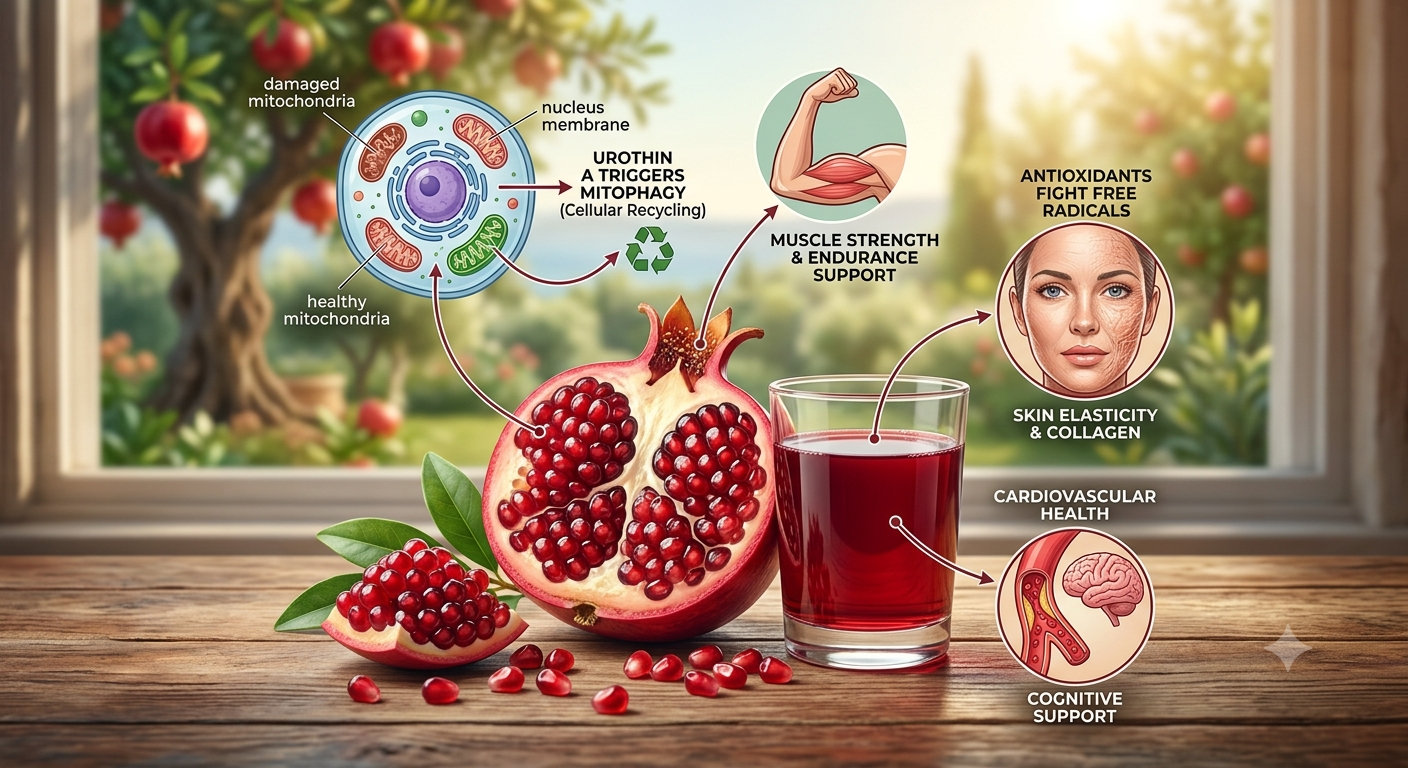
For centuries, the pomegranate (Punica granatum) has been a symbol of vitality and health. In recent years, it has moved from the realm of folklore into the spotlight of modern longevity research. While no food can “reverse” the biological clock, scientific evidence suggests that pomegranate compounds play a significant role in supporting cellular health, which is vital for aging gracefully.
The Secret Ingredient: Urolithin A
The most exciting discovery regarding pomegranates and longevity involves a specific compound called Urolithin A.
When you consume pomegranates, your gut bacteria interact with specific plant compounds (polyphenols known as ellagitannins) to produce Urolithin A. Research indicates that Urolithin A may support aging through a process called mitophagy.
What is Mitophagy?
As we age, our cells’ “powerhouses,” known as mitochondria, begin to malfunction and accumulate debris, which can lead to cellular dysfunction. Mitophagy is the body’s natural “quality control” process—it identifies these damaged mitochondria and recycles them to make room for fresh, efficient ones. Urolithin A has been shown in studies to help trigger this recycling process, supporting better muscle function and mitochondrial health.
Key Mechanisms of Pomegranate-Linked Aging Support
Beyond mitochondrial recycling, pomegranate extracts exert multiple effects that help mitigate age-related decline:
-
Antioxidant Power: Pomegranates are rich in punicalagins, ellagic acid, and anthocyanins. These potent antioxidants neutralize free radicals, which are unstable molecules that cause oxidative stress—a primary driver of cellular aging.
-
Inflammation Modulation: Chronic low-grade inflammation is often called “inflammaging.” Pomegranate compounds have been observed to inhibit signaling pathways (such as NF-κB) that trigger inflammation, potentially protecting tissues and organs from damage over time.
-
Cardiovascular and Cognitive Support: Clinical studies have noted that regular intake of pomegranate preparations can lead to improved blood pressure and markers of vascular health. Some preliminary studies also suggest that these compounds may help maintain cognitive function in older adults.
-
Skin Health: Due to its high Vitamin C content and antioxidant profile, pomegranate is often cited for supporting collagen production, which helps maintain skin elasticity and reduces the appearance of fine lines.
Important Nuances: Can It “Reverse” Aging?
While these findings are promising, it is important to maintain a grounded perspective:
-
Not a Miracle Cure: Pomegranates are a beneficial part of a balanced diet, but they are not a “fountain of youth” that reverses aging.
-
The Gut Microbiome Factor: Not everyone can produce Urolithin A from pomegranates. Research suggests that only about 40% of the population possesses the specific gut bacteria required to convert dietary ellagitannins into Urolithin A effectively.
-
Supplementation vs. Whole Fruit: Because of the variability in gut bacteria, some researchers argue that high-quality, standardized supplements may be more reliable for those looking to ensure they are getting a therapeutic dose of Urolithin A.
-
Ongoing Science: Much of the most dramatic “reversal” data (like lifespan extension) comes from animal models (worms, flies, and rodents). Human trials have shown improvements in muscle endurance and inflammatory markers, but we are still in the early stages of understanding the long-term clinical outcomes in humans.
The Bottom Line
Pomegranates are a nutrient-dense “superfood” that can undoubtedly contribute to a healthy lifestyle. By supporting mitochondrial recycling, reducing inflammation, and protecting against oxidative stress, they help maintain the body’s systems as they age. For the best results, incorporate pomegranates as part of a diverse, whole-food diet, and consult with a healthcare professional before relying on concentrated supplements for anti-aging purposes.
Disclaimer: This article is for informational purposes only and does not constitute medical advice. Always speak with a physician or nutritionist before making significant changes to your diet or starting new supplement regimens.
Related articles:
1. The Secret of Burdock Root: A Natural Detoxifier and Longevity Food
2. Commentary: Antioxidants – The Guardian Sentinels of Human Organs
3. Nutrition and Modern Medicine: Healing Should Not Rely Solely on Drugs
4. The foods and nutritional supplements that can prevent high blood pressure, high cholesterol, and high blood sugar
5. The Golden Trio for Kidney Health: The Traditional Chinese Medicine Wisdom and Practical Guide for Black Beans, Chinese Yam, and Corn Silk
6. Your Brain is an “Energy Hog”: Maintaining Blood Flow is Key to Preventing Dementia
7. Moringa Leaves: The “Super food” Gift from Nature, Unlocking a New Secret Code to Health
8. The Budwig Diet: Origins, Scientific Basis, and Clinical Evidence
9. A Cup of Warm Ginger Tea: Dispelling Chill, Boosting Health – Exploring the Miraculous Power of a Traditional Beverage
10. What are Telomeres in our body? What is their function?
11. The Importance of Gut Bacteria to Overall Health
12. The Health Benefits of L-Glutamine: A Key to Cellular Vitality and Glutathione Production
13. Glutathione: The Master Antioxidant Your Body Can’t Live Without
14. Cysteine: The Sulfur-Rich Amino Acid that Protects Your Health
15. A “Perfect Substitute” for Sugar? — The Hidden Health Myths Behind Artificial Sweeteners
16. The Quiet Superfood: Unlocking the Health Benefits of Makhana Seeds
17. The Ancient Remedy Modern Science Embraces: Unlocking the Benefits of Black Cumin Seed Oil
18. “腹部泵”:您的腹肌如何清洗大脑
19, Rethinking Aging: Is It a Disease or a Natural Destiny?
20. The Battle Against the “Culprits” of Aging: Staying Vigilant Against “Free Radical” Traps in Daily Life
21. 从“病入膏肓”到“起死回生”:揭秘人体元气之根——膏肓穴
22. The Invisible Threat: Understanding Mycotoxins, Their Impact, and How to Reclaim Your Health