
Revitalizing Ipoh’s Public Transportation: A Path Towards Sustainable Mobility
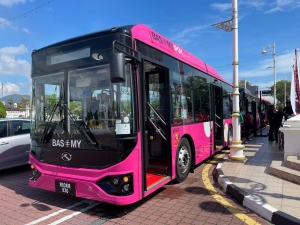
Ipoh, the charming capital of Perak, is renowned for its heritage, cuisine, and natural beauty. Yet, beneath its allure lies a critical urban challenge: a public transportation system that is severely underdeveloped. As highlighted, the service is plagued by low coverage, infrequent buses—with some routes operating only once every two hours—and an overall lack of reliability. This not only inconveniences residents, especially those without private vehicles, but also stifles the city’s economic potential, environmental sustainability, and social equity. To transform Ipoh into a more livable and progressive city, a comprehensive overhaul of its public transport is imperative.
First, increasing frequency and coverage must be the immediate priority. A bus arriving every two hours is not a viable service; it is a mere token. Core routes should aim for intervals of 15–20 minutes during peak hours, while suburban connections could run every 30–45 minutes. This requires significant investment in fleet expansion—purchasing modern, accessible, and energy-efficient buses. Moreover, routes must be redesigned to connect residential areas with key hubs: hospitals, universities, government offices, shopping districts, and tourism spots like the Old Town and cave temples. Integrating with the KTM Komuter train service is also crucial, with synchronized schedules and seamless transfers at stations like Ipoh Railway Station.
Second, embracing technology can revolutionize the user experience. A real-time tracking app—similar to those in Kuala Lumpur—would allow passengers to check bus locations and arrival times, reducing uncertainty and wait times. Additionally, a unified cashless payment system (e.g., a touch-and-go card valid across buses and trains) would simplify fares and improve efficiency. On the management side, data analytics can optimize routes based on demand patterns and passenger feedback.
Third, improving infrastructure and accessibility is essential. Dedicated bus lanes on major roads, such as Jalan Sultan Idris Shah or Jalan Tambun, could speed up travel and make services more reliable. Shelters with seating, lighting, and clear route maps must be installed at all stops. Crucially, buses and stops should be wheelchair-friendly, ensuring inclusivity for all residents.
Fourth, governance and funding models need reevaluation. The current system likely suffers from underfunding and fragmented planning. The Perak state government, Ipoh City Council, and federal agencies like the Ministry of Transport must collaborate closely. Public-private partnerships could be explored for operations or infrastructure projects. Creative funding mechanisms, such as congestion charges in the city center or development levies, could support subsidies to keep fares affordable while maintaining service quality.
Fifth, promoting a cultural shift towards public transport is vital. Awareness campaigns, coupled with incentives like discounted weekly passes for students and senior citizens, can boost ridership. Tourists should be targeted too—a “Hop-On Hop-Off” bus for heritage sites, or day passes combining transport and attraction discounts, would reduce tourist traffic and showcase Ipoh’s commitment to sustainable tourism.
Lastly, long-term planning should consider alternative modes. For a city of Ipoh’s size and density, electric minibuses or on-demand van services (like “Ipoh Transit”) could effectively serve narrower streets or lower-demand areas. Future urban development must be transit-oriented, with higher density permitted along transport corridors.
In conclusion, Ipoh’s transport woes are not insurmountable. They demand political will, strategic investment, and community engagement. A reliable, efficient, and user-friendly public transport system would not only alleviate the hardship faced by car-less residents but also reduce traffic congestion, lower carbon emissions, and spur inclusive growth. Ipoh has the potential to be a model for mid-sized cities in Malaysia—where heritage and modernity coexist, supported by a mobility system that serves all its people. The time to act is now, before the city’s growth is further constrained by its transport failures.
Related articles:
1. The Dangers of PAS’s Religious Political Agenda: Malaysia at a Crossroads
2. A New Political Future for MCA, MIC, and Gerakan: Dissolution, Rebirth, and the Dangers of Any Alignment with PAS
3. Unity Government vs Opposition: Who Will Win GE16?
4. Those who always use race and religion issues to seek political gains are morally corrupt leaders
5. Can Malaysia Ever Be Corruption-Free?
6. It’s Time to Control Commercial Rent! Before It Hurts Our Wallets and the Economy
7. The Truth About the “Chosen People”: Faith or Deception?
8. The Illusion of Democracy and the Reality of Meritocracy — The Global Political Crisis and the Search for a New Governance Model
9. Corruption — The Most Lethal Cancer of a Nation
10. Putting National Interest First: Reject Extremism and Rebuild Malaysia’s Future
11. The Gains and Losses of Trump’s Tariff Policy: An Economic War That Hurt America Itself
12. Cryptocurrency: A Carefully Packaged Scam
13. America’s Debt Trap: Wrong Policies Accelerating National Decline
14. Why Humanity’s Future Should Move Toward Socialism
15. The Dual Nature of Religion — From Moral Guidance to Social Division
16. The West’s Double Standards and Hypocrisy: A Reality Exposed from Ukraine to Gaza
17. Malaysia Politics Today: A Country That Wants Stability, but Keeps Getting Drama
18. Malaysia’s Racial Politics: Are We Stuck Forever, or Slowly Moving Forward?
19. Is Malaysia Becoming More Conservative — Or Just Louder?
20. But Malaysia Could Become More Conservative If Moderates Stay Silent
21. The 2026 Economic Outlook: Navigating a Terrain of Transition and Risk
Leave a Reply
Want to join the discussion?Feel free to contribute!