The Invisible Threat: Understanding Mycotoxins, Their Impact, and How to Reclaim Your Health
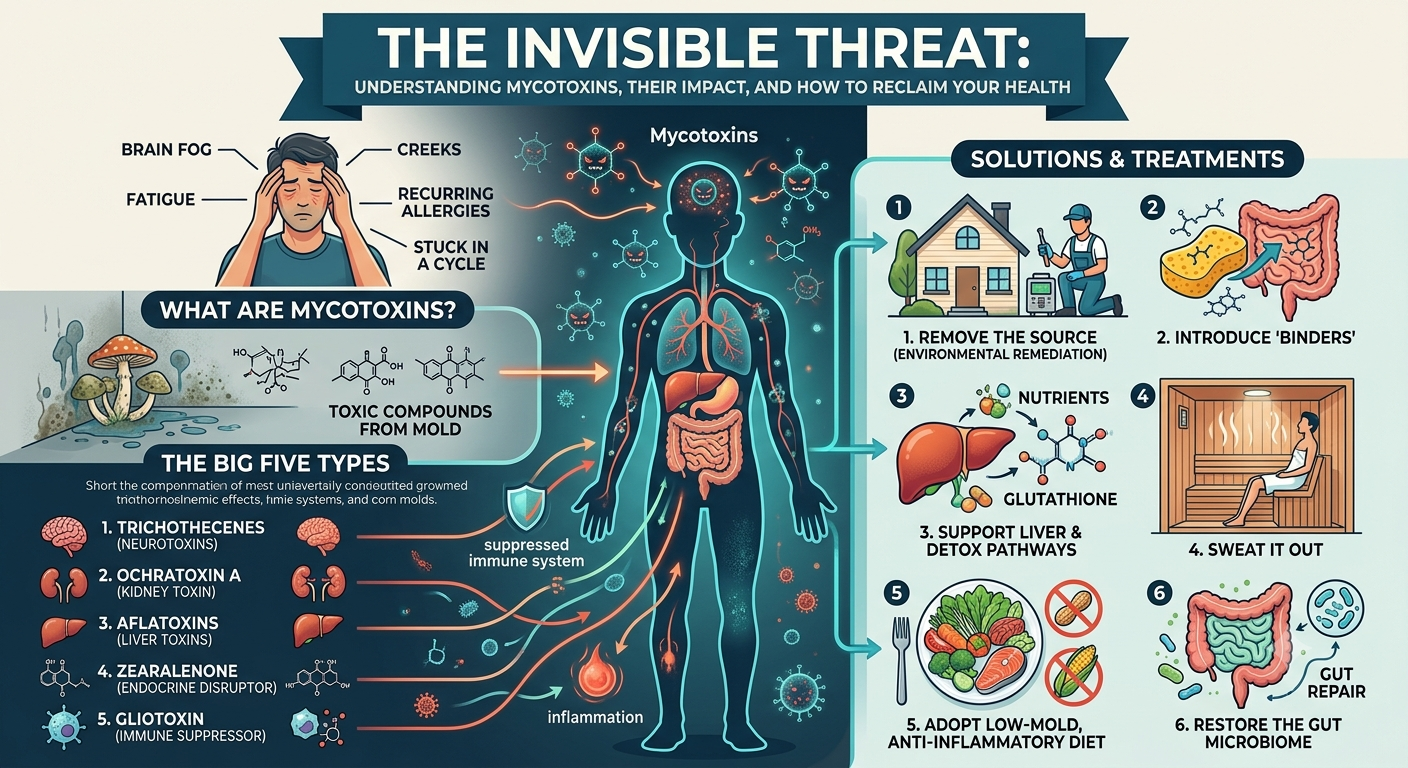
Always tired, dealing with recurring allergies, or stuck in a relentless cycle of brain fog? You might be doing everything “right” regarding diet and sleep, yet still feel unwell. If standard tests keep coming back normal, you may be dealing with an invisible culprit: mycotoxins.
While mold is a common household nuisance, certain molds produce toxic secondary metabolites known as mycotoxins. These microscopic chemical warriors are designed by fungi to defend their territory, but when humans are exposed, they can wreak havoc on the lungs, gut, brain, immunity, and metabolism.
Here is a comprehensive guide to understanding mycotoxins, their characteristics, the most common types, and the functional solutions used to treat mycotoxin illness.
What Are Mycotoxins?
Mycotoxins are toxic compounds produced naturally by certain types of fungi (molds) such as Stachybotrys, Aspergillus, and Penicillium.
It is important to note the difference between a mold allergy and mycotoxin illness. A mold allergy is an immune response to mold spores (causing sneezing, itchy eyes, and asthma). Mycotoxin illness (often called Chronic Inflammatory Response Syndrome, or CIRS) occurs when the actual toxins enter the body through inhalation, ingestion, or skin contact, triggering a systemic, whole-body inflammatory response.
The Characteristics of Mycotoxins
To understand why mycotoxins are so difficult to deal with, you have to understand their unique biological and chemical characteristics:
Microscopic and Stealthy: Mycotoxins are incredibly small (often 1/20th the size of a mold spore). They can easily bypass the body’s natural filtration systems, crossing the blood-brain barrier and penetrating deep into lung tissue and cellular walls.
Highly Resilient: Unlike live mold spores, mycotoxins are chemical compounds. They cannot be “killed.” They can survive extreme heat, freezing temperatures, and standard cleaning chemicals.
Lipophilic (Fat-Soluble): Mycotoxins are attracted to fat. Once in the body, they store themselves in adipose (fat) tissue, the brain (which is largely fat), and cellular membranes, making them difficult for the body to flush out naturally.
Recirculating: The liver attempts to filter mycotoxins into the bile to be excreted through the gut. However, if the gut is unhealthy, these toxins are often reabsorbed into the bloodstream in a loop known as enterohepatic recirculation.
The “Big Five” Types of Mycotoxins
While there are hundreds of identified mycotoxins, a few are notorious for causing the most severe human health issues. They are found both in water-damaged buildings and in contaminated food supplies.
1. Trichothecenes (The Neurotoxins)
Source: Primarily produced by Stachybotrys chartarum (toxic black mold) found in water-damaged buildings.
Impact: These are highly neurotoxic. They cross the blood-brain barrier, causing severe brain fog, memory loss, anxiety, and motor skill issues. They also severely suppress the immune system and disrupt protein synthesis in cells.
2. Ochratoxin A / OTA (The Kidney Toxin)
Source: Produced by Aspergillus and Penicillium. Found in water-damaged homes, as well as contaminated grains, coffee, and wine.
Impact: OTA is highly nephrotoxic (damaging to the kidneys) and is a known immunosuppressant. It depletes the body’s antioxidant reserves and causes deep, chronic fatigue and joint pain.
3. Aflatoxins (The Liver Toxins)
Source: Produced by Aspergillus flavus. Commonly found in improperly stored agricultural crops like peanuts, corn, tree nuts, and cottonseed.
Impact: Aflatoxins are potent liver toxins and known carcinogens. They cause liver inflammation, disrupt lipid metabolism, and suppress the immune system.
4. Zearalenone (The Endocrine Disruptor)
Source: Produced by Fusarium molds, heavily found in corn, wheat, and other grains.
Impact: Zearalenone mimics estrogen in the body. It can cause severe hormonal imbalances, leading to irregular menstrual cycles, fertility issues, mood swings, and estrogen-dominant symptoms.
5. Gliotoxin (The Immune Suppressor)
Source: Produced by Aspergillus fumigatus, a mold that can colonize the human respiratory tract and gut.
Impact: Gliotoxin is notorious for destroying white blood cells (macrophages) and suppressing the immune system, leaving the body highly vulnerable to secondary bacterial and fungal infections.
Solutions and Treatments for Mycotoxin Toxicity
Healing from mycotoxin exposure is a multi-step process. Because the toxins affect the entire body, treatment must address the environment, the detoxification pathways, and the gut.
Disclaimer: Mycotoxin illness is complex. The following protocols are utilized in functional and integrative medicine and should be undertaken under the guidance of a qualified healthcare practitioner.
1. Remove the Source (Environmental Remediation)
You cannot heal in the environment that is making you sick. If you are continually exposed to a water-damaged home or workplace, no amount of detoxing will help.
Action: Have your home or office tested by a professional using an ERMI (Environmental Relative Moldiness Index) test. If mold is present, hire a certified mold remediation expert to fix the water source and safely remove the mold.
2. Introduce “Binders”
Because mycotoxins are recirculated through the gut, binders are essential. Binders are substances that act like a sponge in the digestive tract, trapping toxins so they can be excreted in stool rather than reabsorbed.
Common Binders: Activated charcoal, bentonite clay, zeolite, and prescription binders like cholestyramine.
Note: Binders must be taken away from food, medications, and supplements (usually 1 hour before or 2 hours after) so they don’t bind to your nutrients.
3. Support the Liver and Detox Pathways
The liver needs specific nutrients to process and neutralize mycotoxins so they can be excreted.
Glutathione: The body’s “master antioxidant.” Mycotoxins rapidly deplete glutathione. Liposomal glutathione or precursors like N-Acetyl Cysteine (NAC) are critical for cellular detox.
Liver Support: Supplements like milk thistle, dandelion root, and alpha-lipoic acid help support the liver’s Phase I and Phase II detoxification pathways.
4. Sweat It Out
Since mycotoxins are stored in fat and tissues, sweating is a highly effective way to bypass the liver and excrete toxins directly through the skin.
Infrared Saunas: Infrared heat penetrates deeper into the tissue than traditional saunas, helping to mobilize fat-soluble mycotoxins and release them through sweat. (Always shower immediately after and stay hydrated).
5. Adopt a Low-Mold, Anti-Inflammatory Diet
Diet plays a massive role in reducing the total toxic burden and starving underlying fungal overgrowths (like Candida).
Foods to Avoid: Peanuts, corn, wheat, coffee (unless certified mold-free), aged cheeses, dried fruits, and alcohol. These are highly susceptible to mold contamination.
Foods to Emphasize: Fresh, organic vegetables, high-quality proteins, healthy fats (like coconut oil and olive oil), and low-sugar fruits.
6. Restore the Gut Microbiome
Mycotoxins destroy the gut lining and alter the microbiome, leading to “leaky gut” and systemic inflammation.
Probiotics: Certain strains, particularly Lactobacillus rhamnosus and Bifidobacterium, have been shown to physically bind to mycotoxins in the gut and help excrete them.
Gut Repair: Utilize L-glutamine, zinc carnosine, and aloe vera to heal the intestinal lining and restore a healthy barrier against toxins.
The Road to Recovery
Dealing with mycotoxin toxicity can feel overwhelming, especially when symptoms like brain fog and fatigue make daily life a struggle. However, the human body is remarkably resilient. By removing yourself from the toxic environment, supporting your natural detoxification pathways, and repairing your gut and immune system, it is entirely possible to clear these invisible toxins and reclaim your energy, clarity, and health.
Related articles:
1. The Secret of Burdock Root: A Natural Detoxifier and Longevity Food
2. Commentary: Antioxidants – The Guardian Sentinels of Human Organs
3. Nutrition and Modern Medicine: Healing Should Not Rely Solely on Drugs
4. The foods and nutritional supplements that can prevent high blood pressure, high cholesterol, and high blood sugar
5. The Golden Trio for Kidney Health: The Traditional Chinese Medicine Wisdom and Practical Guide for Black Beans, Chinese Yam, and Corn Silk
6. Your Brain is an “Energy Hog”: Maintaining Blood Flow is Key to Preventing Dementia
7. Moringa Leaves: The “Super food” Gift from Nature, Unlocking a New Secret Code to Health
8. The Budwig Diet: Origins, Scientific Basis, and Clinical Evidence
9. A Cup of Warm Ginger Tea: Dispelling Chill, Boosting Health – Exploring the Miraculous Power of a Traditional Beverage
10. What are Telomeres in our body? What is their function?
11. The Importance of Gut Bacteria to Overall Health
12. The Health Benefits of L-Glutamine: A Key to Cellular Vitality and Glutathione Production
13. Glutathione: The Master Antioxidant Your Body Can’t Live Without
14. Cysteine: The Sulfur-Rich Amino Acid that Protects Your Health
15. A “Perfect Substitute” for Sugar? — The Hidden Health Myths Behind Artificial Sweeteners
16. The Quiet Superfood: Unlocking the Health Benefits of Makhana Seeds
17. The Ancient Remedy Modern Science Embraces: Unlocking the Benefits of Black Cumin Seed Oil
18. “腹部泵”:您的腹肌如何清洗大脑
19, Rethinking Aging: Is It a Disease or a Natural Destiny?
20. The Battle Against the “Culprits” of Aging: Staying Vigilant Against “Free Radical” Traps in Daily Life
21. 从“病入膏肓”到“起死回生”:揭秘人体元气之根——膏肓穴