
The AIoT Revolution: How Artificial Intelligence and the Internet of Things Will Reshape Human Society in the Next Decade
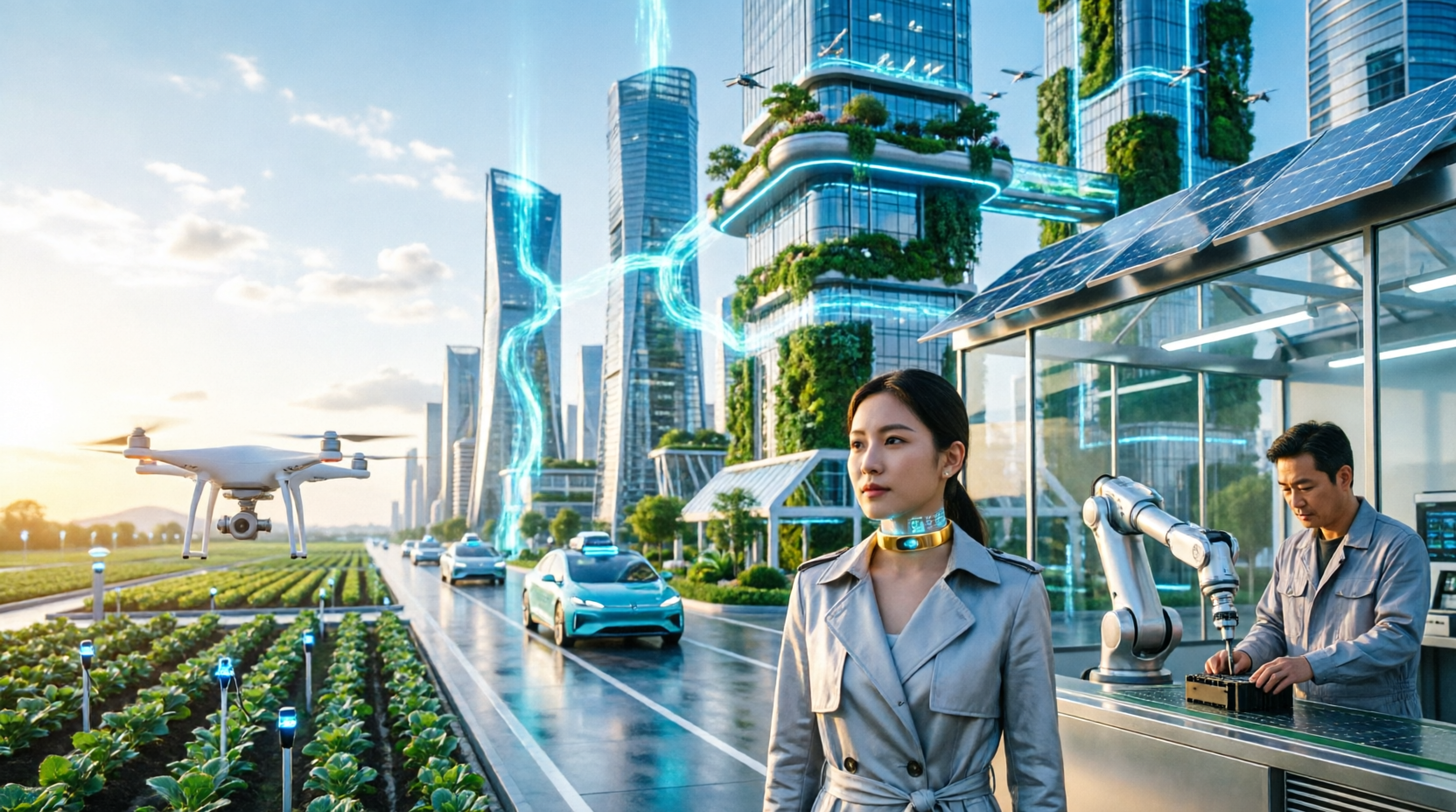
As we stand in 2026, the convergence of Artificial Intelligence (AI) and the Internet of Things (IoT)—often termed Artificial Intelligence of Things (AIoT)—has transitioned from a theoretical concept to a foundational pillar of modern civilization. Over the next five to ten years, this synergy will fundamentally alter how we live, work, heal, and interact with our environment. While IoT provides the vast, interconnected “sensory nervous system” of billions of devices, AI acts as the “brain,” processing this data in real-time to make autonomous, predictive, and highly personalized decisions.
Below is a detailed exploration of how AI and IoT will transform key sectors of human society by the mid-2030s, alongside the critical challenges we must navigate.
1. Healthcare: From Reactive Treatment to Proactive Wellness
The healthcare sector will undergo the most profound and life-saving transformation. Currently, medicine is largely reactive; in the next decade, it will become predictive and preventive.
- Continuous Remote Monitoring: Wearable and implantable IoT devices will continuously track vital signs, blood chemistry, and neurological activity. AI algorithms will analyze this continuous stream of data to detect anomalies (e.g., early signs of atrial fibrillation, diabetic emergencies, or neurodegenerative diseases) long before symptoms manifest, alerting both the patient and their physician.
- Personalized Medicine: AI will synthesize genomic data, lifestyle metrics from IoT wearables, and electronic health records to tailor treatments to the individual. Drug dosages and therapies will be dynamically adjusted in real-time based on a patient’s physiological response.
- Smart Hospitals: Hospitals will operate as fully integrated AIoT ecosystems. Smart beds will monitor patient movement to prevent bedsores, IoT-enabled inventory systems will automatically restock critical supplies, and AI will optimize operating room schedules and predict patient inflow to prevent emergency room bottlenecks.
2. Smart Cities and Urban Infrastructure
By 2035, urban centers will evolve into “cognitive cities” that dynamically adapt to the needs of their inhabitants while optimizing resource consumption.
- Intelligent Transportation: Autonomous vehicles will communicate with each other (V2V) and with city infrastructure (V2I). AI will manage traffic lights in real-time based on actual traffic flow rather than fixed timers, drastically reducing congestion and emissions. Public transit will be dynamically routed based on predictive demand modeling.
- Energy Grids: The transition to renewable energy will be stabilized by AIoT. Smart grids will balance supply and demand instantaneously, drawing power from decentralized sources (like residential solar panels and EV batteries) and predicting energy spikes using weather and usage data.
- Public Safety and Maintenance: IoT sensors embedded in bridges, roads, and buildings will monitor structural integrity. AI will predict when and where maintenance is needed, preventing catastrophic failures. Furthermore, smart waste management systems will optimize garbage collection routes based on real-time bin fill levels.
3. Industry and the Future of Work (Industry 5.0)
The manufacturing and logistics sectors will advance from Industry 4.0 (automation) to Industry 5.0, which emphasizes human-centric, resilient, and sustainable production.
- Digital Twins: Factories will have exact, real-time virtual replicas (digital twins) powered by IoT sensor data. AI will run millions of simulations on these twins to optimize production lines, test new products, and predict equipment failures before they occur (predictive maintenance).
- Collaborative Robotics (Cobots): Rather than replacing humans entirely, AI-driven cobots will work alongside human workers. IoT sensors will ensure safety by detecting human proximity, while AI will adapt the robot’s actions to complement human dexterity and decision-making.
- Supply Chain Resilience: Global supply chains will be fully transparent and autonomous. AI will monitor geopolitical events, weather patterns, and IoT-tracked cargo to dynamically reroute shipments, preventing the kinds of disruptions seen in previous decades.
4. Agriculture and Environmental Sustainability
Feeding a growing global population while combating climate change will rely heavily on AIoT.
- Precision Agriculture: Fields will be mapped in centimeter-level detail by drone swarms and ground-based IoT sensors measuring soil moisture, nutrient levels, and pest presence. AI will direct autonomous tractors to apply water, fertilizer, or pesticides only to the specific plants that need them, reducing chemical runoff by up to 80% and conserving vital water resources.
- Climate Monitoring: A global network of IoT environmental sensors (in oceans, forests, and urban areas) will feed data into AI climate models. This will enable hyper-local weather forecasting, early warning systems for natural disasters, and precise tracking of carbon capture initiatives.
5. Daily Life and the Ambient Smart Home
The concept of the “smart home” will evolve from manually controlled gadgets to “ambient intelligence.”
- Context-Aware Environments: Homes will anticipate needs without explicit commands. By analyzing biometric data (e.g., stress levels from a smartwatch) and environmental context, the home’s AI will automatically adjust lighting, temperature, and even play calming music when a resident arrives home after a stressful day.
- Seamless Automation: Refrigerators will track food expiration dates and autonomously order replacements. AI home assistants will evolve from simple voice responders to proactive household managers, coordinating energy usage to take advantage of off-peak electricity rates.
Critical Challenges and Ethical Imperatives
While the potential is immense, the next decade will also be defined by significant challenges that require proactive governance and ethical frameworks.
- Data Privacy and the “Panopticon” Effect: With billions of sensors collecting intimate data about our health, movements, and habits, the risk of pervasive surveillance is real. Society must adopt privacy-preserving technologies like Federated Learning (where AI models are trained locally on devices without sharing raw data) and enforce strict, globally harmonized data governance regulations.
- Cybersecurity Vulnerabilities: Every connected IoT device is a potential entry point for cyberattacks. As AI becomes integrated into critical infrastructure, AI-driven cyberattacks (which can adapt and evolve in real-time) will become a major threat. This necessitates the development of autonomous, AI-driven cybersecurity defense systems that can detect and neutralize threats at machine speed.
- The Socioeconomic Divide: There is a tangible risk that the benefits of AIoT will be concentrated in wealthy nations and urban centers, exacerbating the global digital divide. Governments and international bodies must invest in digital infrastructure and education to ensure equitable access to these technologies.
- Job Displacement and Transition: While AIoT will create new jobs (e.g., AI ethicists, IoT security analysts, robot maintenance technicians), it will inevitably displace workers in routine, manual, and data-processing roles. Robust societal safety nets, universal basic income (UBI) experiments, and massive investments in lifelong learning and reskilling programs will be essential.
- Environmental Impact of Technology: The computational power required to train advanced AI models and the manufacturing of billions of IoT devices carry a significant carbon footprint and e-waste burden. The tech industry must prioritize green computing, energy-efficient AI architectures (like neuromorphic chips), and circular economy principles for hardware.
Conclusion
Over the next five to ten years, the fusion of Artificial Intelligence and the Internet of Things will not merely introduce new gadgets; it will rewire the operating system of human society. We will move from a world of disconnected, reactive systems to one of interconnected, predictive, and autonomous ecosystems.
However, technology is not destiny. The ultimate impact of the AIoT revolution will not be determined by the sophistication of our algorithms or the density of our sensor networks, but by the wisdom of our policies, the inclusivity of our designs, and our collective commitment to ensuring that these powerful tools serve to elevate the human condition. The next decade is a critical window to build a future that is not only smarter, but also more equitable, sustainable, and profoundly human.
Related articles:
1. Introduction: Suno AI – The Dawn of a New Musical Epoch
2. The Double-Edged Sword: AI’s Societal Impact and the Imperative for Governance
3. AI Music‘s New Frontier: A Look at Udio’s Innovative Approach
4. Vheer AI: Your Free, Unlimited Gateway to AI-Powered Visual Creativity
5. The Future of OpenClaw and Self-Hosted LLMs: Will Local AI Agents Take Over Offices and Homes?
6. Beyond Static Commands: The Rise of the Self-Learning Hermes AI Agent
7. DeepSeek-V4 and the Shifting Landscape of Global AI Leadership
2. The Double-Edged Sword: AI’s Societal Impact and the Imperative for Governance
3. AI Music‘s New Frontier: A Look at Udio’s Innovative Approach
4. Vheer AI: Your Free, Unlimited Gateway to AI-Powered Visual Creativity
5. The Future of OpenClaw and Self-Hosted LLMs: Will Local AI Agents Take Over Offices and Homes?
6. Beyond Static Commands: The Rise of the Self-Learning Hermes AI Agent
7. DeepSeek-V4 and the Shifting Landscape of Global AI Leadership
Leave a Reply
Want to join the discussion?Feel free to contribute!